










Blog


Modern finance teams need accurate, real-time visibility into cash positions. Traditional spreadsheet-based forecasting no longer meets today’s demands for speed and confidence. Intelligent cash flow analysis software enables organizations to move beyond reactive reporting toward proactive financial management that drives strategic growth and business success.
The evolution from manual cash tracking to automated, AI-powered forecasting represents a fundamental shift in how businesses understand and manage their most vital resource. Companies that embrace advanced cash flow forecast software gain competitive advantages through improved accuracy, reduced manual effort, and an enhanced ability to anticipate financial challenges before they impact operations.
The business landscape has transformed dramatically, introducing complexity that makes cash flow forecasting increasingly challenging. Globalization means companies manage multiple currencies, navigate varying payment terms across regions, and contend with exchange rate fluctuations that significantly impact cash positions.
Digital transformation has accelerated transaction volumes while fragmenting data across disparate systems. Payment methods now include digital wallets, ACH transfers, and specialized B2B payment gateways. Each channel generates data in different formats, creating integration challenges manual processes cannot address efficiently.
Customer payment behavior has become less predictable. Extended payment terms, early payment discounts, and dynamic negotiation mean historical patterns provide less reliable guidance. Economic volatility introduces uncertainty, as interest rate changes, supply chain disruptions, and market shifts affect when cash flows into and out of organizations.
Regulatory requirements have intensified, with finance teams maintaining audit trails, demonstrating compliance, and providing detailed reporting.
The volume and velocity of these demands make spreadsheet approaches prone to errors, time-consuming to maintain, and difficult to scale. Modern treasury cashflow forecasting software addresses these challenges by centralizing data, automating calculations, and providing analytical sophistication for today’s complex financial environment.
Intelligent cash flow analysis software continuously gathers information from ERP systems, accounting software, bank accounts, and other sources, eliminating the need for manual data entry that can consume hours and introduce errors. The software automatically reconciles transactions, categorizes cash movements, and maintains up-to-date records without requiring finance team intervention.
Machine learning algorithms analyze historical patterns, identify trends, and generate forecasts accounting for seasonality, customer payment behaviors, and business cycles. These systems learn from actual outcomes, continuously refining models to improve accuracy. Rather than relying on static assumptions, intelligent software adapts to changing conditions and provides probabilistic forecasts that help teams understand possible outcomes.
Finance professionals can model different business strategies, economic conditions, or operational changes to understand cash flow implications before committing resources. Questions like “What happens if we extend payment terms?” or “How would a 15% revenue decline affect liquidity?” can be answered in minutes rather than days.
Real-time monitoring capabilities identify issues as they emerge rather than weeks later. Automated alerts notify stakeholders when cash positions approach predetermined thresholds, when major customers deviate from expected payment patterns, or when collections activity falls behind targets. This proactive approach allows organizations to take corrective action quickly.
The best software for cash flow analysis enhances collaboration across finance functions and with other departments. Sales teams gain visibility into how pricing and terms affect cash flow, while operations leaders understand the financial implications of inventory purchases. Shared dashboards ensure everyone works from the same data and understands the organization’s true financial position.
Transform forecasting with intelligent cash flow visibility
Watch a virtual demo of Gaviti to see real-time dashboards, scenarios, and alerts.
Modern cash flow analysis dashboard software should include these essential capabilities:
The greatest value from cashflow forecast software emerges when it connects accounts receivable management, treasury operations, and broader financial planning.
Real-time AR visibility – Forecasts reflect actual invoice status, customer payment history, and collection activities. The software incorporates aging reports, applies collection probability scores to outstanding invoices, and adjusts projections based on the actions of the collection team.
Proactive collection management – When major customers’ payment patterns shift, the system flags deviations and quantifies impact on cash positions. Collections teams prioritize outreach based on which accounts have the greatest influence on liquidity.
Improved forecast accuracy – Resolving collection issues before they significantly impact cash flow creates a virtuous cycle of better predictions and better outcomes.
Strategic cash positioning – Forecast data supports optimal decisions about investing surplus cash or arranging financing well before shortfalls occur.
Automated cash management – Integration with banking platforms enables automated sweeps, transfers, and investments based on predefined rules, minimizing idle cash while ensuring sufficient liquidity.
Payment timing optimization – Organizations balance maintaining supplier relationships, capturing early payment discounts, and preserving cash for other priorities.
When sales, operations, and finance teams understand how their decisions affect cash flow, they make choices that support overall financial health. Sales adjust pricing negotiations knowing precise liquidity impact, while operations time major purchases to align with strong cash positions. This transforms cash flow analysis software into a strategic tool influencing decisions across the entire organization.
Start by documenting current forecasting processes, identifying pain points, and defining clear objectives. Understanding whether you need improved accuracy, reduced manual effort, better collaboration, or enhanced scenario planning will guide your evaluation.
Evaluate integration capabilities. Catalog all systems containing relevant cash flow data—ERP, accounting software, banking platforms, AR/AP modules. The best software for cash flow analysis offers robust connectivity through pre-built integrations, minimizing implementation complexity.
Match forecasting sophistication to your needs. Organizations with predictable cash flows might succeed with simpler approaches, while those facing high variability need advanced machine learning. Consider multi-currency support, consolidated forecasting, and industry-specific features.
Prioritize user experience. Request demonstrations showing how finance professionals actually work with the software daily. Evaluate whether the interface feels intuitive, whether common tasks are efficient, and whether reporting tools enable independent analysis.
Ensure scalability. Solutions working well at $50 million may struggle at $200 million. Understand the vendor’s product roadmap and commitment to ongoing development. Cloud-based cash flow analysis dashboard software often provides greater flexibility than on-premise installations.
Assess vendor stability and support. Review customer references from similar companies. Understand implementation timelines, resource requirements, support options, and response time commitments. The relationship should function as a partnership rather than a transaction.
Gaviti brings enterprise-grade forecasting capabilities to organizations seeking to transform cash flow visibility and management. The platform’s intelligent approach to accounts receivable directly enhances forecast accuracy by providing real-time visibility into customer payment behaviors, invoice status, and collection activities, driving cash inflows.
Key intelligent features include:
By combining sophisticated forecasting algorithms with powerful AR automation, Gaviti enables organizations to transition from reactive cash management to proactive financial strategy. The platform’s intelligence continuously improves as it processes more data, delivering increasingly accurate projections that support confident decision-making.
AI-driven tools typically achieve 85-95% accuracy compared to 60-75% for manual spreadsheet models. Machine learning algorithms analyze far more variables and detect subtle patterns humans miss. They continuously learn from actual outcomes to refine predictions, whereas manual models rely on static assumptions that quickly become outdated.
Comprehensive forecasting requires connecting ERP, general ledger, AR/AP systems, bank accounts, payment processors, and CRM. Including payroll systems, inventory management platforms, and budgeting tools further enhances accuracy. The more complete your data integration, the more reliable your forecasts become for supporting critical financial decisions.
Absolutely. Modern cloud-based platforms offer scalable pricing and functionality, making sophisticated forecasting accessible to organizations of all sizes. Small and mid-sized companies often see dramatic improvements because they’re replacing particularly manual processes. Many vendors offer implementation support specifically designed for resource-constrained finance teams.
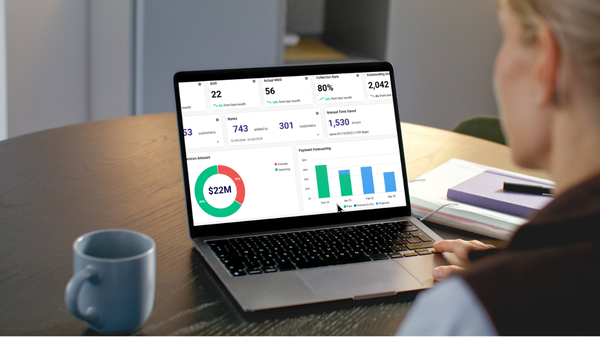
Dashboards transform complex data into visual formats, revealing trends, anomalies, and opportunities immediately. Real-time monitoring enables quick responses to developing issues. Customizable views ensure each stakeholder sees relevant metrics, while drill-down capabilities support deeper investigation, making data-driven decisions faster and more confident.
Leading solutions offer comprehensive system integration, multiple forecasting methodologies, AI-powered predictive analytics, intuitive visualization tools, robust scenario modeling, and strong security controls. They provide both granular detail for analysis and executive-level summaries. Continuous learning capabilities, automated alerts, collaborative workflows, and dedicated customer support separate excellent platforms from adequate ones.










Link is copied!
Contact us!
Welcome back