











Blog

Predictive analytics in accounts receivable is transforming how finance teams manage cash flow, reduce risk, and optimize collection strategies. By leveraging historical data and machine learning algorithms, organizations can now forecast payment behaviors, identify at-risk accounts, and prioritize collection efforts with unprecedented accuracy.
Predictive analytics in accounts receivable uses advanced algorithms and historical data to forecast future payment behaviors and collection outcomes. This technology analyzes patterns from past invoices, payment histories, customer interactions, and external market data to generate actionable insights about which customers are likely to pay on time, which may delay payment, and which accounts require immediate attention.
A/R predictive analytics goes beyond traditional reporting by identifying hidden patterns that human analysts might miss. Instead of relying solely on aging reports and manual judgment, finance teams can leverage AI in accounts receivable to make data-driven decisions about credit limits, payment terms, and collection strategies. This proactive approach helps organizations optimize working capital while maintaining positive customer relationships.
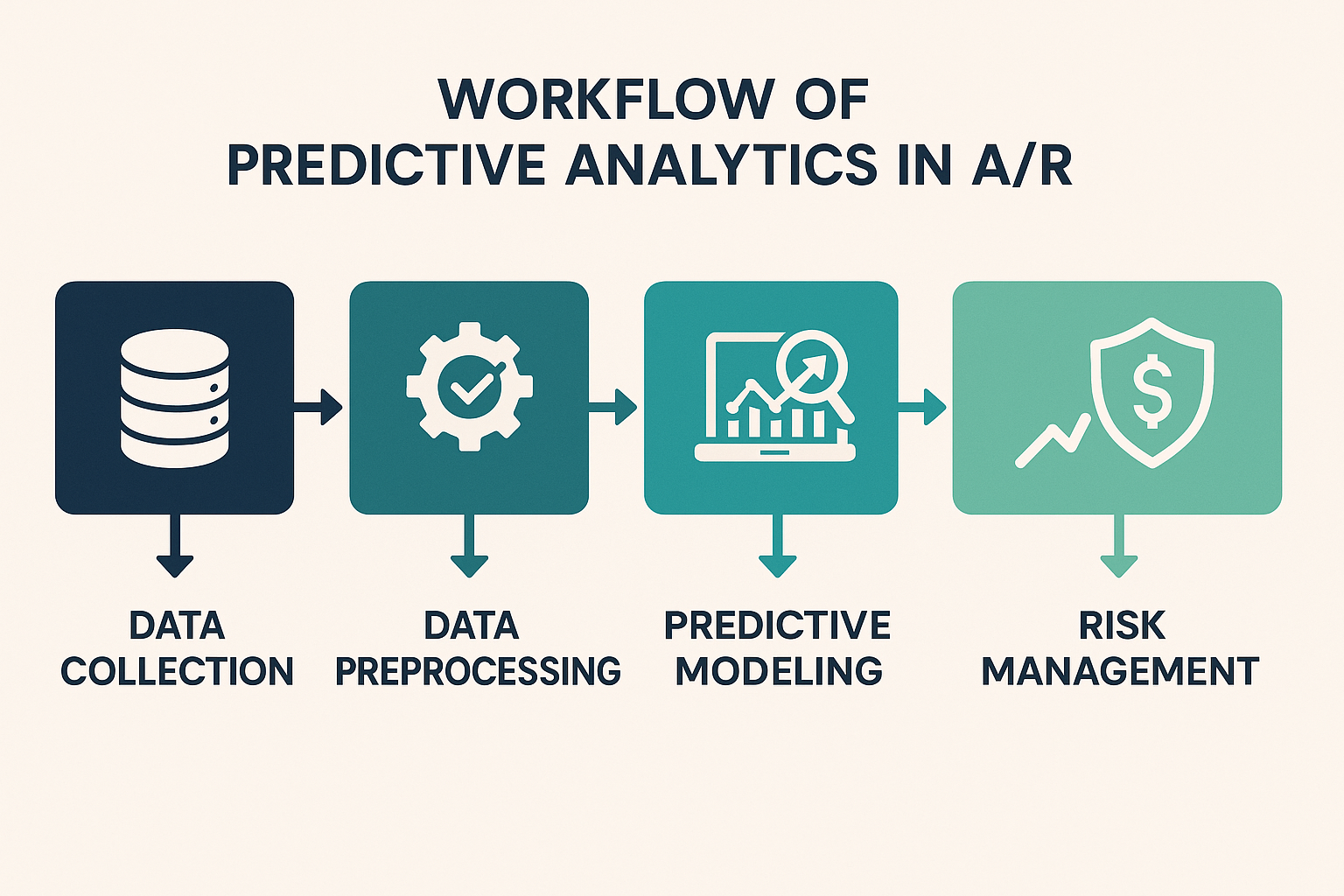
Payment prediction analytics operates through a multi-stage process that transforms raw financial data into actionable forecasts. The system begins by aggregating data from multiple sources, including invoice details, payment histories, customer demographics, communication logs, and even external economic indicators.
Machine learning models then analyze this data to identify correlations and patterns. For example, the system might discover that customers in certain industries consistently pay 15 days past due during specific quarters, or that invoices above a certain threshold have a higher likelihood of disputes.
Collections predictive modeling continuously refines its algorithms as new data becomes available. Each payment, whether on time or late, feeds back into the model, improving accuracy over time. This self-learning capability makes predictive analytics increasingly valuable as the system accumulates more historical data.
The technology integrates seamlessly with existing A/R reporting software solutions, enhancing traditional accounts receivable reports with forward-looking insights. Modern autonomous finance tools can even automate collection actions based on these predictions, such as sending payment reminders to high-risk accounts or adjusting credit terms proactively.
Predictive analytics generates forecasts across multiple critical AR metrics. Payment probability scores rank customers based on their likelihood of paying by the due date, enabling collectors to focus on accounts with the highest risk of delinquency.
Days Sales Outstanding (DSO) forecasts help finance teams anticipate cash flow needs weeks or months in advance. By predicting which invoices will remain outstanding beyond normal terms, organizations can better plan their liquidity requirements and working capital strategies.
Customer lifetime value predictions combine payment behavior with revenue potential, helping teams balance aggressive collections against maintaining valuable long-term relationships. This metric proves especially valuable when deciding whether to extend additional credit or tighten terms with borderline accounts.
Dispute likelihood indicators flag invoices with characteristics similar to historically disputed bills, allowing teams to proactively address potential issues before they delay payment. Similarly, collection success rates predict which collection strategies will work best for specific customer segments.
Advanced systems also forecast credit risk scores that evolve continuously based on payment patterns, economic conditions, and business changes. These dynamic risk assessments enable more nuanced credit decisions than traditional static credit limits, supporting the achievement of smart goals and cutting-edge technologies in A/R.
Implementing predictive analytics delivers measurable improvements across the entire collections process. Organizations typically see DSO reductions of 10-30% as teams focus efforts on accounts most likely to benefit from intervention while avoiding unnecessary contact with reliable payers.
Cash flow predictability improves dramatically when finance teams can accurately forecast which invoices will be paid when. This visibility enables better treasury management, reduces reliance on credit lines, and supports more strategic investment decisions.
Collection efficiency increases as collectors allocate their time to high-value activities rather than chasing customers who would have paid anyway. Predictive models identify the optimal timing and communication channel for each account, resulting in significantly improved contact rates and payment commitments.
Customer relationships often improve paradoxically, as predictive analytics enables more personalized, less aggressive collection approaches. Customers who consistently pay on time receive minimal contact, while those experiencing genuine difficulties can be offered payment plans before accounts become seriously delinquent.
Credit decision quality improves as credit management solutions leverage predictive insights to set appropriate credit limits and terms. Rather than applying uniform policies across all customers, teams can calibrate risk tolerance based on predicted payment behavior and strategic value.
Write-off rates decline as early warning systems identify deteriorating accounts while recovery options still exist. Proactive intervention, enabled by predictive analytics, often prevents accounts from progressing to write-off status entirely.
Predictive analytics in accounts receivable represents a transformative approach to financial management, moving organizations from reactive to proactive cash flow strategies. By leveraging statistical algorithms, data mining techniques, and machine learning to analyze historical patterns, this technology forecasts payment behaviors, identifies at-risk accounts, and optimizes collection efforts before issues arise.
Gaviti’s predictive analytics platform transforms A/R operations through:
The power of Gaviti lies in its ability to turn complex financial data into actionable intelligence, enabling finance teams to work smarter, not harder. By implementing machine learning models that continuously refine predictions based on your organization’s unique payment patterns, Gaviti delivers measurable ROI through reduced collection costs, improved cash flow, and stronger customer relationships.
Ready to transform your accounts receivable operations? Schedule an in-person demo with Gaviti today
Predictive analytics leverages invoice data (amounts, terms, dates), payment histories, customer demographics, industry classifications, communication records, and credit reports. External data like economic indicators, seasonal patterns, and market conditions also enhance prediction accuracy. The most effective models combine internal transactional data with broader contextual information.
Yes, AI achieves 80-90% accuracy in predicting B2B payment behaviors when trained on sufficient historical data. B2B environments actually provide more predictable patterns than consumer collections because business payment behaviors reflect established processes, cash flow cycles, and relationship dynamics. Accuracy improves continuously as models learn from new payment outcomes.
Predictive analytics identifies which accounts require immediate attention and which will pay without intervention, allowing collectors to prioritize effectively. By predicting payment dates, teams can take proactive action before invoices become overdue. This targeted approach typically reduces DSO by 10-30% while requiring fewer collection resources.
No specialized data science skills are required for modern predictive analytics platforms. These tools feature intuitive interfaces that present predictions as simple scores, risk ratings, and recommended actions. The underlying algorithms operate automatically, allowing finance professionals to focus on strategy and customer relationships rather than technical implementation.













Link is copied!
Contact us!
Welcome back