











Blog


Top 6 Benefits of the Countback Method Over the Simple DSO Formula
January 28, 2026

The landscape of accounts receivable deductions management has transformed dramatically over the past decade. Companies now deal with an expanding array of deduction types including trade promotions, pricing disputes, shortage claims, quality issues, compliance penalties, and unauthorized deductions. Each category requires different documentation, validation approaches, and resolution strategies, creating a complex web of workflows that manual processes struggle to handle efficiently. In addition, many companies use their own deduction codes and don’t always explain to their suppliers what they are.
Adding to this complexity, many organizations operate across multiple business units, currencies, and customer portals, each with unique requirements and documentation standards. Customers increasingly expect faster resolution times while simultaneously submitting more detailed and nuanced claims. The proliferation of digital channels means deductions can arrive through email, customer portals, EDI transactions, or directly embedded in payment remittance data, making centralized tracking and management challenging without proper systems in place.
The stakes are high. Unresolved or improperly handled deductions directly impact working capital, inflate DSO metrics, and strain customer relationships. According to industry research, companies typically face deduction rates between 2-5% of gross sales, with some industries experiencing rates as high as 15-20%. For a company with $500 million in annual revenue, even a 3% deduction rate represents $15 million in disputed funds that require investigation and resolution.
A modern deductions management process transforms reactive, manual workflows into proactive, automated systems that provide visibility, control, and efficiency. At its core, this modernized approach centers on intelligent automation that handles routine tasks while empowering A/R professionals to focus on complex problem-solving and strategic customer engagement.
The process begins with automated deduction capture from multiple sources. Rather than manually entering data from emails, spreadsheets, and various customer portals, modern systems automatically extract deduction information from remittance data, EDI files, and digital communications. This automation ensures that no deductions slip through the cracks and eliminates time-consuming data entry errors that plague manual processes.
Once captured, sophisticated validation rules automatically categorize deductions based on reason codes, dollar amounts, customer history, and supporting documentation. The system can instantly identify valid deductions that should be written off, invalid claims that require immediate dispute, and gray-area cases that need human investigation. This intelligent triage ensures that A/R teams spend their time where it matters most.
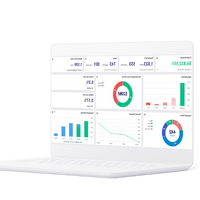
See first-hand how automation and AI transforms deductions from a bottleneck into a strategic advantage.
View the Virtual DemoResearch and documentation happen within an integrated platform that connects to ERP systems, customer portals, shipping records, and historical transaction data. Instead of hunting through multiple disconnected systems, AR professionals work from a unified interface that surfaces relevant information automatically. The system maintains complete audit trails, automatically attaching supporting documentation and tracking all actions taken on each deduction.
Modern deduction management also includes robust collaboration features. Team members can assign tasks, add notes, escalate issues, and communicate with customers without leaving the platform. Managers gain real-time visibility into team workload, pending deductions, aging analysis, and resolution metrics through customizable dashboards and reports.
Manual processes create information silos that impede effective decision-making. When deduction data lives across email inboxes, Excel spreadsheets, sticky notes, and individual team members’ memories, no one has a complete picture of the situation. Managers can’t accurately assess team capacity or identify bottlenecks. Customer service representatives lack visibility into deduction status when fielding inquiries. Finance teams struggle to forecast bad debt reserves accurately.
The error rate in manual deduction handling poses serious risks. Data entry mistakes, misplaced documentation, missed deadlines, and inconsistent validation approaches lead to invalid deductions being approved, valid claims being denied, and customer relationships suffering. A single transposition error or misfiled document can result in thousands of dollars in unnecessary write-offs or strained customer partnerships.
Scalability represents another critical failure point. As transaction volumes grow, manual processes simply don’t scale without proportional increases in headcount. This creates a vicious cycle where companies either accept degraded performance metrics, incur escalating labor costs, or face both simultaneously. Companies trying to mitigate outsourcing challenges with A/R software often discover that without proper automation, even offshore resources struggle to handle volume effectively.
Manual processes also fail to provide the analytical insights needed for continuous improvement.
Automation in deductions management fundamentally transforms how A/R teams operate by eliminating repetitive tasks, enforcing consistent processes, and providing intelligence that human workers simply can’t match when processing high volumes. Rather than replacing human judgment, automation augments AR professionals’ capabilities, freeing them to focus on activities that truly require human expertise.
Making intelligent data accessible: The first major impact of automation comes through intelligent data capture and classification. Modern systems use machine learning algorithms to extract deduction information from unstructured sources like email attachments, PDF remittances, and customer portal notifications. These systems learn from historical patterns to automatically categorize deductions, assign reason codes, and route items to appropriate team members based on deduction type, customer, or complexity. This automation alone can reduce processing time by 40-50% compared to manual data entry and classification.
Validation automation: Systems can instantly compare claimed deductions against source documents, purchase orders, delivery confirmations, and pricing agreements stored in connected systems. Rule-based validation engines apply consistent criteria across all deductions, flagging discrepancies and automatically approving or denying straightforward cases. This consistency eliminates the subjective variability that often creeps into manual validation processes.
Workflow automation: This orchestrates the entire deduction lifecycle, ensuring nothing falls through the cracks. The system automatically creates tasks, sends reminders, escalates aged items, and triggers notifications when additional information arrives. This automated orchestration maintains momentum on every deduction, preventing the common manual process problem where items languish forgotten in someone’s inbox until they age into write-offs.
Audit trail: Document management automation solves one of manual processes’ most time-consuming challenges. Rather than searching through email threads, shared drives, and multiple systems, automation automatically gathers relevant supporting documentation and attaches it to each deduction. When team members need to review backup, everything sits in one place with a complete audit trail showing who accessed what and when.
Analytics and reporting: Analytics and reporting automation provides continuous visibility into process performance. Dashboards update in real-time, showing managers team productivity, deduction aging, resolution rates, and financial impact without requiring manual report compilation. These insights enable proactive management and data-driven decision-making that manual processes simply can’t support at scale.
Successfully implementing automation requires careful planning and systematic execution across multiple dimensions. Organizations that rush implementation without proper preparation often encounter resistance, integration challenges, and disappointing results. Following a structured approach significantly increases the likelihood of successful adoption and measurable ROI.
The first step involves conducting a comprehensive process assessment. Document current workflows in detail: how deductions arrive, how they’re categorized, what research steps occur, where bottlenecks exist, and how decisions get made. Quantify current performance metrics including average resolution time, deduction backlog, staff hours consumed, write-off rates, and customer satisfaction scores. This baseline enables accurate ROI calculation and helps identify the highest-value automation opportunities.
Next, define clear objectives and success criteria. What specific outcomes does your organization seek? Common goals include reducing resolution time by X days, decreasing administrative time by Y%, improving first-contact resolution rates, or enhancing documentation compliance. Establishing measurable targets upfront ensures alignment across stakeholders and provides benchmarks for evaluating implementation success.
Technology selection requires evaluating solutions against your specific requirements. Key considerations include integration capabilities with existing ERP and billing systems, support for your deduction volume and complexity, user interface intuitiveness, reporting and analytics features, scalability for future growth, and vendor stability and support quality. Many organizations find that specialized accounts receivable deductions management platforms offer more sophisticated functionality than generic workflow tools or basic ERP modules.
Data integration planning deserves particular attention. Identify all systems that need to connect: your ERP, customer portals, email systems, document management platforms, and any specialized tools. Map data flows showing how information moves between systems. Establish data standards ensuring consistency across sources. Plan for both initial data migration and ongoing synchronization. Poor integration represents one of the most common reasons automation implementations fall short of expectations.
Workflow design translates current processes into automated form while incorporating best practices and efficiency improvements. Define validation rules specifying when deductions should be auto-approved, auto-denied, or routed for human review. Create escalation procedures ensuring aged items receive appropriate attention. Establish assignment logic distributing work optimally across team members. Design exception handling for unusual cases. This design phase should involve AR team members who understand process nuances and can identify potential gaps.
Change management and training are essential for driving adoption. Even the best automation fails if users don’t embrace it or understand how to leverage its capabilities. Develop comprehensive training covering both system mechanics and revised workflows. Create quick reference guides and video tutorials. Identify power users who can support their colleagues. Communicate benefits clearly, emphasizing how automation eliminates tedious work rather than eliminating jobs. Address concerns openly and involve users in refinement decisions.
Phased rollout minimizes risk and enables learning. Rather than switching all deductions to automated processing simultaneously, start with a subset, perhaps one deduction type, one customer segment, or one region. Monitor performance closely, gather user feedback, and refine workflows based on real-world experience. Gradually expand scope as confidence builds and processes mature. This iterative approach allows course correction without major disruptions.
Measuring deductions management performance requires tracking metrics across multiple dimensions: efficiency, accuracy, financial impact, and customer satisfaction. Organizations serious about optimization monitor these metrics consistently, using data to identify trends, benchmark performance, and guide improvement initiatives.
Gaviti stands out as the premier deductions management solution by combining fully automated workflows with comprehensive dispute resolution capabilities that transform accounts receivable operations. The platform delivers invoice-to-cash flow automation specifically designed to help A/R teams reduce DSO, manage credit risk more effectively, and streamline the entire collection process. By automating and auditing the complete deduction lifecycle, Gaviti enables finance teams to validate and resolve customer deductions faster while maintaining complete visibility and control.
Organizations using Gaviti benefit from reduced manual effort, improved cash flow predictability, and the ability to scale deductions management without proportionally increasing headcount. Ready to transform your deductions management? Schedule a demo today to see how Gaviti can help you.
Deductions typically increase with volume due to several factors: higher transaction counts create more opportunities for errors in pricing, shipping, or invoicing; growing customer bases mean more diverse requirements and potential misunderstandings; system limitations force manual workarounds that introduce mistakes; and overburdened AR teams lack time for proactive dispute prevention. Complex promotional programs and frequent pricing changes also contribute significantly to escalating deduction rates.
Automation dramatically accelerates research by automatically gathering relevant documentation from connected systems, presenting all supporting information in a unified interface, and applying intelligent matching algorithms that identify discrepancies instantly. Rather than manually searching through emails, ERPs, customer portals, and file systems, a process taking 20-40 minutes per deduction, automated systems surface everything needed in seconds, allowing AR professionals to focus on analysis rather than data gathering.
Critical datasets include original invoice details with line-item pricing, purchase orders and contracts establishing agreed terms, shipping and delivery confirmations with dates and quantities, promotional agreements and rebate programs, payment history showing transaction patterns, and correspondence records documenting previous communications. Effective validation requires integrating these disparate data sources into a cohesive view that enables comprehensive comparison against customer claims and company records.
Unresolved deductions directly inflate DSO by keeping receivables open beyond their actual due dates, creating artificial aging that distorts financial metrics and ties up working capital. Each day of delay in deduction resolution extends cash conversion cycles, reducing funds available for operations, growth investments, or debt reduction. Companies with slow deductions processes often see DSO inflated by 3-7 days, representing millions in unnecessarily delayed collections that impact liquidity and financial performance.
Essential features include automated deduction capture from multiple sources, intelligent categorization and routing based on configurable rules, seamless integration with ERP and customer systems, centralized documentation management with complete audit trails, customizable workflows supporting your specific process requirements, real-time dashboards and analytics for performance visibility, and collaboration capabilities enabling efficient team coordination. Prioritize platforms offering both automation and flexibility to adapt as your processes evolve and improve over time.












Link is copied!
Contact us!
Welcome back